The history of absinthe is amazing, from its birth, through its development in the 19th century, its demise in the early 20th century, and then its recent renaissance. And throughout all this, the growth, decline and re-birth were in large part caused ... by accidents:
NUMBER SIX:
ABSINTHE BOOMED, DIED AND WAS RE-BORN HELPED BY A SERIES OF ACCIDENTS. FIRSLY IT WAS CHOSEN AS A MEDICINAL SUPPLEMENT TO PROTECT FRENCH SOLDIERS IN ALGERIA, THEN IT BECAME A REPLACEMENT FOR WINE AND COGNAC WHEN AN AMERICAN VIRUS DECIMATED FRANCE’S VINEYARDS FROM 1868 ONWARDS, THEN ITS VERY SUCCESS AND A FEW ACCIDENTS ARISING FROM ALCOHOLIC OVER-INDULGENCE LED TO ITS BAN, AND FINALLY, THE EU BUREAUCRATS RE-LEGALISED IT BY MISTAKE (the last of these is recounted in more detail here).
The individual events are well-known to absinthe historians and followers, but the accidental nature of the series of events has not really been detailed. The fact that French soldiers were given absinthe in Algeria was, I am sure, chance. Unless the corporate officers at French absinthe companies in the 1830's really planned a Coca-Cola style of colonialism which worked in a different way (Coke established soft drinks bottling lines in Europe during World War 2 to keep the troops motivated ... and to supply the locals after the war finished). 110 years earlier, the victorious French soldiers returned to Paris with a love of absinthe and demanded that café owners find it for them. Genius ... or accident?
I am sure that the phylloxera outbreak of 1868 was accidental, and it was this that really caused absinthe sales to boom in France (and elsewhere). In fact, if this had not happened, then maybe absinthe's growth would have continued, albeit less spectacularly. And thus absinthe might not have become the enemy which led the wine companies and the temperance movement to form their unholy alliance against it. In short, the accident that led to its amazing growth also contained the seeds of its death.
Assisted of course by one or two accidents involving over-indulgence, such as Jean Lanfray, the Swiss labourer who in 1905 consumed seven glasses of wine, six glasses of cognac, one coffee laced with brandy, two crème de menthes, and two glasses of absinthe after eating a sandwich. He returned home drunk with his father, and drank another coffee with brandy, and then shot his wife and daughters. And absinthe became the scapegoat and was then banned.
It's good to know that today, most of the companies who make and sell absinthe are taking charge of their destiny, by not allowing accidents (like Lanfray) to happen again. Properly made absinthe (and not the bath tub sort that became popular when demand exceeded supply in Paris), responsible marketing (no over-indulgence), and well thought-out strategies will hopefully continue to prevail in the 21st century. Au revoir aux accidents!
For Part 7 of 10 things you didn't know about absinthe (How even the French called their best absinthes "Absinthe Suisse" during the 19th century), click here.
For Part 8 of 10 things you don't know about absinthe (What happened when absinthe was banned, and how the Swiss bypassed that ban), click here.
For Part 9 of 10 things you didn't know about absinthe (The accident that led to full European re-legalisation of absinthe), click here.
For Part 10 of 10 things you didn't know about absinthe (The truth about the so-called Burning Ritual), click here.
Tuesday, 25 October 2011

Monday, 24 October 2011
10 things you didn't know about Absinthe: Number 7
Firstly, a declaration of writer's interest: I am involved with the promotion of Swiss absinthe. You may therefore want to take some of what I say here with a pinch of salt, although never with fire, and possibly not even with sugar!
Absinthe was born in Switzerland in the second half of the 18th century. From the start of the next century, some companies also started to produce absinthe in France, partly, it seems, to avoid import duties.
Over the course of the next hundred years, different styles, strengths and qualities of absinthe appeared, and as that happened a system appeared for grading the different qualities. These included "Absinthe Suisse", "Absinthe Superieure", "Absinthe Fine" or "Demi-Fine" and lastly "Absinthe Ordinaire".
And ...
number SEVEN:
So you can still find today old posters of French absinthes adorned with a Swiss flag (or if you are really lucky, you may find old bottles!). The excellent Absinthe Encyclopedia also shows several 19th century French absinthes clearly labelled "Absinthe Suisse." The poster for Royer-Hutin absinthe (produced in Dijon, France) bears the headline "Absinthe-Suisse;" labels for P. Course of Bergerac and Premiers Fils proudly bear a top banner stating "Absinthe Suisse" (pages 36/37).
Three years after absinthe was banned in Switzerland, Pernod's bottle continues to show the Swiss flag:

And after absinthe was banned in France and after Pernod shifted production to Spain, their 1935 bottles referred to the Couvet, Switzerland address. One could even make an argument that old bottles of Herbsaint (the US replacement for absinthe) bore a cross with more than a passing resemblance to the Swiss flag.
Interestingly, absinthe was still made in Switzerland during the time it was banned (making it the only country with a continuous 220 year history of making absinthe). Interestingly Switzerland is the only country with rules governing how absinthe must be made (it must be distilled and cannot contain artificial colours): rules which stop many of today's leading absinthes being sold in Switzerland.
So in certain respects the standards which led to "Absinthe Suisse" being seen as the top quality in the 19th century are still in place. 21st century consumer legislation and protection, however, will probably prevent French or any other non-Swiss absinthes from using any reference to Switzerland on their packaging in future ....
For Part 8 of 10 things you don't know about absinthe (What happened when absinthe was banned, and how the Swiss bypassed that ban), click here.
For Part 9 of 10 things you didn't know about absinthe (The accident that led to full European re-legalisation of absinthe), click here.
For Part 10 of 10 things you didn't know about absinthe (The truth about the so-called Burning Ritual), click here.
Absinthe was born in Switzerland in the second half of the 18th century. From the start of the next century, some companies also started to produce absinthe in France, partly, it seems, to avoid import duties.
Over the course of the next hundred years, different styles, strengths and qualities of absinthe appeared, and as that happened a system appeared for grading the different qualities. These included "Absinthe Suisse", "Absinthe Superieure", "Absinthe Fine" or "Demi-Fine" and lastly "Absinthe Ordinaire".
And ...
In the 19th century, “Absinthe Suisse” was used as a term to indicate the very highest quality absinthes, even if some of them were not made in Switzerland.
So you can still find today old posters of French absinthes adorned with a Swiss flag (or if you are really lucky, you may find old bottles!). The excellent Absinthe Encyclopedia also shows several 19th century French absinthes clearly labelled "Absinthe Suisse." The poster for Royer-Hutin absinthe (produced in Dijon, France) bears the headline "Absinthe-Suisse;" labels for P. Course of Bergerac and Premiers Fils proudly bear a top banner stating "Absinthe Suisse" (pages 36/37).
Three years after absinthe was banned in Switzerland, Pernod's bottle continues to show the Swiss flag:

And after absinthe was banned in France and after Pernod shifted production to Spain, their 1935 bottles referred to the Couvet, Switzerland address. One could even make an argument that old bottles of Herbsaint (the US replacement for absinthe) bore a cross with more than a passing resemblance to the Swiss flag.
Interestingly, absinthe was still made in Switzerland during the time it was banned (making it the only country with a continuous 220 year history of making absinthe). Interestingly Switzerland is the only country with rules governing how absinthe must be made (it must be distilled and cannot contain artificial colours): rules which stop many of today's leading absinthes being sold in Switzerland.
So in certain respects the standards which led to "Absinthe Suisse" being seen as the top quality in the 19th century are still in place. 21st century consumer legislation and protection, however, will probably prevent French or any other non-Swiss absinthes from using any reference to Switzerland on their packaging in future ....
For Part 8 of 10 things you don't know about absinthe (What happened when absinthe was banned, and how the Swiss bypassed that ban), click here.
For Part 9 of 10 things you didn't know about absinthe (The accident that led to full European re-legalisation of absinthe), click here.
For Part 10 of 10 things you didn't know about absinthe (The truth about the so-called Burning Ritual), click here.
Sunday, 23 October 2011
10 things you didn't know about Absinthe: Number 8
Absinthe was banned in Switzerland in 1910 and in France in 1915. And what happened then? Well, there were three interesting developments.

(Picture taken by Luc Santiago of Vert d'Absinthe, Paris.
Luc quite often has bottles of this for sale)
Luc quite often has bottles of this for sale)

While there are some major differences between absinthe and pastis, it does seem likely that pastis was intended to fill the gap left by the disappearance of absinthe in France.
And
3. The Swiss carried on making absinthe! Which, in this series, becomes:
NUMBER EIGHT:
WHEN ABSINTHE PRODUCTION WAS BANNED IN FRANCE AND SWITZERLAND, THE SWISS BYPASSED THE BAN, AND CARRIED ON PRODUCING "UNDERGROUND." THEY HAVE THUS MAINTAINED WHAT IS NOW ABOUT 220 YEARS OF CONTINUOUS PRODUCTION OF ABSINTHE.
The Swiss were not going to let a small thing like the law get in the way of their love of absinthe. While the big distilleries had to be closed down, that only meant that consumers had to find other ways to get hold of it. And thus absinthe quite literally became a cottage industry, produced at home by farmers and their wives, for themselves, their families and their close friends. It is suggested that they reverted to clear or "blanche" absinthes to fool the Customs officials that their bottles could contain schnapps or other colourless spirits, but I think the Customs officials knew what was going on and probably took their cut of the spoils. And so it continued from 1910 to 2005 when absinthe was finally re-legalised in Switzerland.
More details can be found here, and in the first video here.
For Part 9 of 10 things you didn't know about absinthe (The accident that led to full European re-legalisation of absinthe), click here.
For Part 10 of 10 things you didn't know about absinthe (The truth about the so-called Burning Ritual), click here.
Saturday, 22 October 2011
10 things you didn't know about Absinthe: Number 9
Absinthe has boomed, been banned, and then been re-born through a series of accidents. Circumstances completely beyond the control of those making or promoting absinthe.
The first accidents which led to absinthe's growth in the 19th century were the prescription of absinthe to French soldiers in Algeria from the 1830's onwards and the outbreak of phylloxera which decimated the French vineyards after 1868.
But my favourite accident came in 1988 from the bureaucrats of the European Union.

NUMBER NINE:
ABSINTHES WERE EFFECTIVELY RE-LEGALISED ACROSS EUROPE BY ACCIDENT WHEN THE EU STANDARDISED THE USE OF ADDITIVES IN FOOD AND DRINK FROM 1988 ONWARDS. THE IMPACT OF THIS AS FAR AS ABSINTHE WAS CONCERNED WAS ONLY REALISED IN FRANCE ABOUT 11 YEARS LATER!
Deciding there was a need to standardise the use of food ingredients across the European Union, 22 June 1988 saw the Council Directive on the approximation of the laws of the Member States relating to flavourings for use in foodstuffs and to source materials for their production.
Page 10 of that document sets out the limit for Thujone use:-
There seems to have been no thought at the time that this had anything to do with absinthe. Indeed it did not lead directly to the onset of or any increase in absinthe production in the European Union. But 10 years later when companies within the EU started looking at the possibility of importing absinthe from outside the EU and selling it more widely within the EU, this document provided full legal justification for doing so. "Absinthe," or more correctly "Bohemian Absinth" came to the UK in 1998, and the first products bearing the word "absinthe" on the label were produced in France in 2000.
The first accidents which led to absinthe's growth in the 19th century were the prescription of absinthe to French soldiers in Algeria from the 1830's onwards and the outbreak of phylloxera which decimated the French vineyards after 1868.
But my favourite accident came in 1988 from the bureaucrats of the European Union.

NUMBER NINE:
ABSINTHES WERE EFFECTIVELY RE-LEGALISED ACROSS EUROPE BY ACCIDENT WHEN THE EU STANDARDISED THE USE OF ADDITIVES IN FOOD AND DRINK FROM 1988 ONWARDS. THE IMPACT OF THIS AS FAR AS ABSINTHE WAS CONCERNED WAS ONLY REALISED IN FRANCE ABOUT 11 YEARS LATER!
Deciding there was a need to standardise the use of food ingredients across the European Union, 22 June 1988 saw the Council Directive on the approximation of the laws of the Member States relating to flavourings for use in foodstuffs and to source materials for their production.
Page 10 of that document sets out the limit for Thujone use:-
- 5 mg/kg in alcoholic beverages with not more than 25% volume of alcohol
- 10 mg/kg in alcoholic beverages with more than 25% volume of alcohol
- 25 mg/kg in foodstuffs containing preparations based on sage
- 35 mg/kg in bitters
There seems to have been no thought at the time that this had anything to do with absinthe. Indeed it did not lead directly to the onset of or any increase in absinthe production in the European Union. But 10 years later when companies within the EU started looking at the possibility of importing absinthe from outside the EU and selling it more widely within the EU, this document provided full legal justification for doing so. "Absinthe," or more correctly "Bohemian Absinth" came to the UK in 1998, and the first products bearing the word "absinthe" on the label were produced in France in 2000.
It is not often that one has cause to thank the bureaucrats of the European Union. But this is definitely worth a big "Thank You" and an even bigger "Santé!"
For Part 10 of 10 things you didn't know about absinthe (The truth about the so-called Burning Ritual), click here.
Friday, 21 October 2011
10 things you didn't know about Absinthe: Number 10
As someone involved in trying to create more interest in high quality absinthes, I am well aware that there has been - and continues to be - a lot of misinformation about absinthe. So the three most important things I can do to rectify that are .... "Education .... education .... and more education."
I am also aware that education isn't always fun, so I try to lighten up my efforts to educate with my own particular sense of humour. English humour? Yes, albeit not directly in the style of Monty Python.
I can also be quite verbose (see some of my other posts for proof of that), so in an attempt to keep it simple, I am going to present over the next 10 days my short list of things you didn't know about absinthe. Some of my better-informed readers will no doubt say "I already knew that," so to them I apologise in advance. A headline saying "10 things you might not have known about absinthe, but maybe some of you do" would not be so punchy!
And I'm going to present them in count-down style from 10 to 1, knowing also that in the future, readers will see them in the blog format (from 1 to 10, in newest post first date order).
So here goes:
NUMBER TEN:
THE SO-CALLED "BURNING RITUAL" SEEN IN SOME BARS HAS NO BASIS IN HISTORY: THERE IS NO EVIDENCE OF ANY SUCH RITUAL EXISTING BEFORE THE MID-1990'S.

There is a published account about the birth of the burning ritual on the La Fée site. This is the key excerpt, recounting the event in 1998:
"Our next move would simultaneously misinform the world's media and popularise what we call the Sugar and Burn, a thoroughly modern way of serving absinth. It happened quite by chance, as we arrived back in Prague .. at one of my favourite Prague hangouts, Café FX, above Wenceslas Square in the Praha 2 district. After settling into the lounge seats at the back, fate decreed that we would witness our first ever burning absinth, something I had never seen in all my years of socialising in bars, clubs and the homes of friends in Prague."
I won't talk too much about so-called "Bohemian absinth(e)," which tends to be not much more than wormwood flavoured vodka with added food colouring and which seems to be disappearing in most countries at long last.If its makers think such a product is fit mainly for burning, who am I to disagree?
However it is clear that "Bohemian absinthe" is significantly different from anything called absinthe in the 19th century.
Firstly it doesn't have anise, so it doesn't turn cloudy – or louche – when water is added.
Secondly it is a very different colour – electric blue almost, usually as a result of artificial colouring.
And then somehow someone decided that the best way to drink it was to burn it first.
Call me old-fashioned but something seems wrong here! Does anyone use an XO cognac to set fire to the Christmas pudding? Or would one normally use a cheaper brandy? So maybe Bohemain absinthe and the burning ritual are made for each other.
However there is no reason to burn real absinthe. To do so ruins the taste and merely burns off the alcohol that is a major part of the product cost. It's effectively burning bank notes.
And if that wasn't sufficient reason, then I suggest you sit back and watch this video ....
Wow!
I am also aware that education isn't always fun, so I try to lighten up my efforts to educate with my own particular sense of humour. English humour? Yes, albeit not directly in the style of Monty Python.
I can also be quite verbose (see some of my other posts for proof of that), so in an attempt to keep it simple, I am going to present over the next 10 days my short list of things you didn't know about absinthe. Some of my better-informed readers will no doubt say "I already knew that," so to them I apologise in advance. A headline saying "10 things you might not have known about absinthe, but maybe some of you do" would not be so punchy!
And I'm going to present them in count-down style from 10 to 1, knowing also that in the future, readers will see them in the blog format (from 1 to 10, in newest post first date order).
So here goes:
NUMBER TEN:
THE SO-CALLED "BURNING RITUAL" SEEN IN SOME BARS HAS NO BASIS IN HISTORY: THERE IS NO EVIDENCE OF ANY SUCH RITUAL EXISTING BEFORE THE MID-1990'S.

There is a published account about the birth of the burning ritual on the La Fée site. This is the key excerpt, recounting the event in 1998:
"Our next move would simultaneously misinform the world's media and popularise what we call the Sugar and Burn, a thoroughly modern way of serving absinth. It happened quite by chance, as we arrived back in Prague .. at one of my favourite Prague hangouts, Café FX, above Wenceslas Square in the Praha 2 district. After settling into the lounge seats at the back, fate decreed that we would witness our first ever burning absinth, something I had never seen in all my years of socialising in bars, clubs and the homes of friends in Prague."
I won't talk too much about so-called "Bohemian absinth(e)," which tends to be not much more than wormwood flavoured vodka with added food colouring and which seems to be disappearing in most countries at long last.If its makers think such a product is fit mainly for burning, who am I to disagree?
However it is clear that "Bohemian absinthe" is significantly different from anything called absinthe in the 19th century.
Firstly it doesn't have anise, so it doesn't turn cloudy – or louche – when water is added.
Secondly it is a very different colour – electric blue almost, usually as a result of artificial colouring.
And then somehow someone decided that the best way to drink it was to burn it first.
Call me old-fashioned but something seems wrong here! Does anyone use an XO cognac to set fire to the Christmas pudding? Or would one normally use a cheaper brandy? So maybe Bohemain absinthe and the burning ritual are made for each other.
However there is no reason to burn real absinthe. To do so ruins the taste and merely burns off the alcohol that is a major part of the product cost. It's effectively burning bank notes.
And if that wasn't sufficient reason, then I suggest you sit back and watch this video ....
Wow!
Wednesday, 27 July 2011
From field to fountain ... in 209 seconds
It's the end of July and so it is harvest time in the Val-de-Travers where wormwood and other plants have been used to make absinthe since the late 18th century. The methods used to harvest and dry the plants and then to distill the absinthe have changed very little since then (maybe some of the alambics are a bit bigger).
This new video features Yves Currit (grower) and Claude-Alain Bugnon (distiller of La Clandestine, Angélique and Butterfly absinthes). In 209 seconds, it goes from "field to fountain:" a centuries-old tradition in the Val-de-Travers and nearby Pontarlier in France (of course in real life, the process takes a lot longer).
Not all "absinthes" are produced in such a natural way. As far as I know, there are no videos showing the "field to fountain" approach of the artificially-coloured absinthes sold in some countries. I guess the process of adding test tubes or even buckets of FD&C food colourings doesn't look so interesting!
This new video features Yves Currit (grower) and Claude-Alain Bugnon (distiller of La Clandestine, Angélique and Butterfly absinthes). In 209 seconds, it goes from "field to fountain:" a centuries-old tradition in the Val-de-Travers and nearby Pontarlier in France (of course in real life, the process takes a lot longer).
Not all "absinthes" are produced in such a natural way. As far as I know, there are no videos showing the "field to fountain" approach of the artificially-coloured absinthes sold in some countries. I guess the process of adding test tubes or even buckets of FD&C food colourings doesn't look so interesting!
Monday, 27 June 2011
What makes the "Green Fairy" green?
I love discussing absinthe with fellow absinthe fans, with so-called "absinthe virgins," and with customers, and I have the opportunity to do so nearly every day. I have done so in North America, Europe (including Russia), Asia and Australia.
And one question that is commonly asked wherever I go is "What makes the Green Fairy Green?"
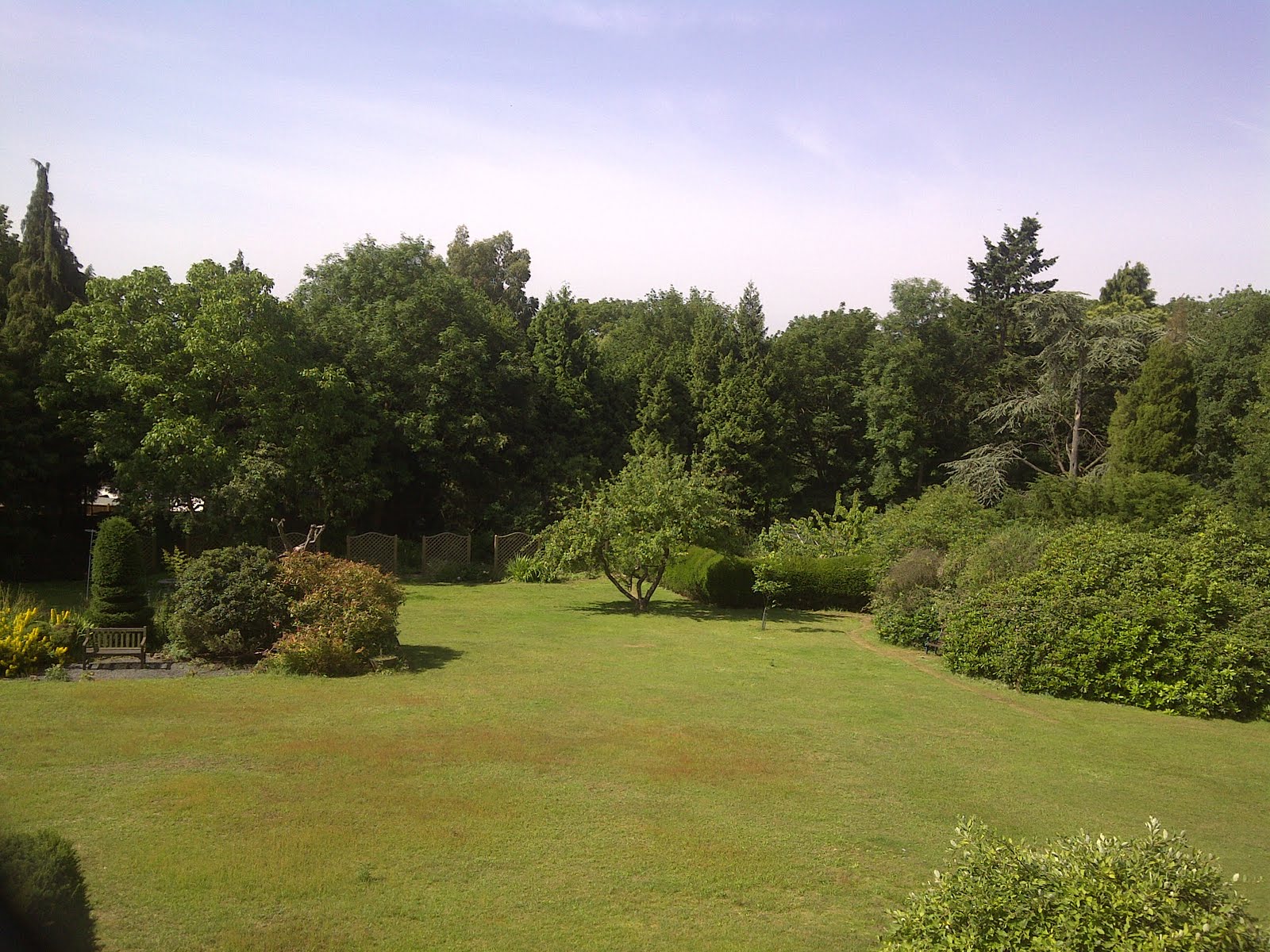
That's an interesting question to ask, having just gone past mid-summer's day (in the Northern hemisphere), and as I look out at our garden which remains a beautiful natural green. Which is more than can be said for many of today's vertes.
In the USA, the addition of artificial colours in absinthe has to be declared on the label. This is what is declared on three absinthes that are available in the USA:-
Absinthe 1:
Contains caramel color & certified colors FD&C Blue #1 & FD&C Yellow #5
Absinthe 2:
Contains FD&C Yellow #5 and Blue #1
Absinthe 3:
Alcohol with natural flavors, certified colors and FD&C Yellow #5 added
And this is what one of those looks like (removed from the bottle to spare their blushes).

Now it is true that in the 19th century some absinthes were artificially coloured, but these were the lowest quality absinthes that were available. So there is a precedent for artificial colours in absinthe. What's the difference, then, between these artificially coloured absinthes and those vertes made without artificial colours?
Naturally Green Absinthe
I'll use the Wikipedia description:
"The distillation of absinthe first produces a colourless distillate that leaves the alembic at around 72 percent ABV. The distillate can be bottled clear, to produce a Blanche or la Bleue absinthe, or it can be coloured using artificial or natural colouring. Traditional absinthes take their green colour from chlorophyll, which is present in some of the herbal ingredients during the secondary maceration. The natural colouring process is considered critical for absinthe ageing, since the chlorophyll remains chemically active. The chlorophyll plays the same role in absinthe that tannins do in wine or brown liquors. This is done by steeping petite wormwood, hyssop, and melissa (among other herbs) in the liquid. Chlorophyll from these herbs is extracted giving the drink its famous green colour. This process also provides the herbal complexity that is typical of high quality absinthe."
This process can take 24 hours and produces an absinthe with complexity, one that change subtly in the bottle over time. Just like fine wine.
Artificially Green Absinthe
The process to add artificial green colouring to a clear absinthe is very different. It is simply added in the way that cassis is added to champagne to make a Kir Royale. Instant visual effect, but no added complexity. In fact adding colouring in this way has been likened to adding red colouring to white wine, and then declaring it as ... "red wine."
I am grateful to Ted Breaux for helping me with these notes on artificial colouring:
"The colours that are almost always used to create an artificial green are what are formally known in the U.S. as FD&C Blue #1 and FD&C Yellow #5 (FD&C = Food, Drug, and Cosmetic). U.S. labeling requirements mandate that artificial colors be disclosed in the USA market, although this is not generally so elsewhere.
FD&C Blue #1 in the USA is E133 in the E.U., “FCF Brilliant Blue” in commerce, or to the scientific community: N-Ethyl-N-[4-[[4-[ethyl[(3-sulfophenyl)methyl]amino]phenyl]2-sulfophenyl)methylene]-2,5-cyclohexadien-1-ylidiene]-3-sulfobenzenemethanaminium hydroxide inner salt, disodium salt. First discovered in 1896, it is commonly used as a textile dye and wood stain. The Wikipedia article is quite informative. It is a synthetic dye that is produced from petroleum, was previously banned in most of Europe, and remains a subject of debate where health is concerned.
FD&C Yellow #5 in the USA is E102 in the E.U., “Tartrazine” in commerce, or to the scientific community: 4,5-Dihydro-5-oxo-1-(4-sulfophenyl)-4-[(sulfophenyl)azol]-1H-pyrazole-3-carboxylic acid trisodium salt. It was first patented in 1949, and has also been used in textiles. Of the synthetic azo dyes, this one carries the greatest possibility for allergic reactions. Again the Wikipedia article is well worth reading, revealing a very questionable track record for this synthetic dye, which has raised some serious concerns in the UK."
Caveat Emptor
Of course consumers can make up their own minds whether to choose blanche absinthes (like La Clandestine), naturally coloured verte absinthes, or artificially coloured absinthes. The use of artificial colours does not make an absinthe "not real," although some of the artificially coloured brands do also add sugar to their recipes. Using artificially colours in a pre-sweetened product delivers a product that is much cheaper to make, but, in most cases, not much cheaper to buy.
Maybe some of the poorer 19th century poets and artists drank lower quality artificially coloured absinthes sometimes. But they were clearly in a minority. For 21st century consumers looking to enjoy the drinks enjoyed by most people in France, Switzerland, the USA and the UK back then, you might want to check the ingredient list if you live in the USA. Or just hold your absinthe up to the light if you live elsewhere ...
Friday, 1 April 2011
A new absinthe ... with bite!
I'm pleased to announce my new absinthe brand commissioned from world-famous distiller, Claude-Alain Bugnon.
Research shows that there are two main types of absinthe consumers. Many are happy with absinthe in cocktails, or served the traditional way. Some just want to shoot it or set it on fire.
My new brand will address those who love the traditional taste of absinthe but who are still looking for something with more excitement, more aggression, in short a bit more "bite." So I am delighted to announce "Mossquito Absinthe."
 Of course, "Mossquito" plays a little on my own name (Alan Moss): well if Marilyn Manson can have his own absinthe, why can't I?
More significantly, “Mossquito” pays homage to one of the early catalysts of absinthe popularity: the humble North African mosquito. French doctors prescribed absinthe to the troops in Algeria to prevent malaria in the early 19th century. Without the mosquito, absinthe would not have achieved the popularity it did in France in later years. Indeed the mosquito probably did more to help the explosive growth of absinthe than some of the early legends such as Dr. Ordinaire (or some of the 21st century peddlers of "fauxsinthe").
Santé to the Algerian mosquitoes and to this very modern Mossquito!
Research shows that there are two main types of absinthe consumers. Many are happy with absinthe in cocktails, or served the traditional way. Some just want to shoot it or set it on fire.
My new brand will address those who love the traditional taste of absinthe but who are still looking for something with more excitement, more aggression, in short a bit more "bite." So I am delighted to announce "Mossquito Absinthe."
 Of course, "Mossquito" plays a little on my own name (Alan Moss): well if Marilyn Manson can have his own absinthe, why can't I?
More significantly, “Mossquito” pays homage to one of the early catalysts of absinthe popularity: the humble North African mosquito. French doctors prescribed absinthe to the troops in Algeria to prevent malaria in the early 19th century. Without the mosquito, absinthe would not have achieved the popularity it did in France in later years. Indeed the mosquito probably did more to help the explosive growth of absinthe than some of the early legends such as Dr. Ordinaire (or some of the 21st century peddlers of "fauxsinthe").
Santé to the Algerian mosquitoes and to this very modern Mossquito!
Tuesday, 15 March 2011
Absinthe: the movie

THIS REVIEW HAS VARIOUS MOVIE QUOTES AND REFERENCES. SEE IF YOU CAN SPOT THEM ALL!
“Absinthe,” a new documentary about our favourite drink, was launched too late for an Oscar in 2011 (of course the competition was quite tough with “The King’s Speech” winning much of the glory and “Inside Job” winning the best documentary prize).
However, for absinthe fans and for those wanting to find out more about this mysterious spirit, Chris Buddy’s new film, now available for download in the USA from Amazon, will certainly win many friends, and maybe prizes in the future.
With my association with Claude-Alain Bugnon, I was fortunate enough to get a DVD copy of the film by airmail directly from Director Chris Buddy (global distribution has still to be announced), and I can only agree with the claim that it is, for now at least, the “Definitive Film on History’s Most Notorious Drink.”
Buddy rounds ups the usual suspects with a cast featuring many of the “Who’s Who” of modern absinthe, including the producers, sorry, I mean distillers, Ted Breaux, Claude-Alain Bugnon and Francois Guy, Lucid CEO Jared Gurfein, and many notable absinthe historians including Marie-Claude Delahaye, Barnaby Conrad III, Benoît Noël …. and, speaking via webcam (which made it sound like he was 20,000 leagues under the sea), David Nathan-Maister. Nice to see friends Peter Schaf, Nico Tripet, Luc-Santiago Rodriguez and Jean-Luc Tucoulat too (but no absinthe bloggers, unfortunately!).
Intriguingly, there was no trace of those responsible for artificially coloured and/or pre-sweetened absinthe, and no trace of products the absinthe community calls “fauxsinthes.” Nothing other than 100% distilled absinthes, the stuff that dreams are made of.
And, except for some fleeting shots of Combier, hardly a single distillery shown from outside the Val-de-Travers or Pontarlier (respectively the birthplace and 19th century capital of absinthe). Others would say that is the film’s only real omission but it’s certainly representative of historic absinthe production centres.
The movie progresses from the birth of absinthe (clearly explained by Marie-Claude Delahaye to be in Couvet in the 1790’s, and NOT anywhere else in 1805!). So much for a famous movie quote: “In Switzerland they had brotherly love - they had 500 years of democracy and peace, and what did that produce? The cuckoo clock.” How about absinthe, Mr Welles? Marie-Claude is famous within the absinthe community, but she disarmingly tells us later that she doesn’t drink (so no point in thinking "I'll have what she's having").
Absinthe then details the drink's steady early growth, and its then more spectacular growth in the late 19th century Paris (“We’ll always have Paris”). The ban and the 20th century underground manufacture in Switzerland are covered in a lot of detail, bringing Claude-Alain Bugnon into focus, as large as life and just as humorous on film as in the flesh, as he bids for possible Oscar 2012 glory!

One can almost hear him saying “"I love the smell of wormwood in the morning!" By comparison, Ted Breaux comes across

as positively poetic, with Viridian’s Jared Gurfein, in detailing the US re-legalisation, playing the straight man to the famous absinthe distillers.
I’d be hard pressed to find many factual errors in the film, although I was surprised at the minimal references to the phylloxera blight which played a big part in absinthe’s explosive growth. And it is only recently becoming clear that absinthe was not actually banned in the USA in 1912, although importation and transport across State lines were (so production in some States, and sales within those States, could well have continued until much closer to prohibition).
A great way to watch Absinthe would be to sample some of the absinthes shown in the film at the same time they (or their inventors/owners) are on screen. So get the absinthe fountain out, invite some friends and share one of the Jade absinthes while listening to Ted Breaux talking about 19th century absinthe. Crack open a bottle of La Clandestine while listening to Claude-Alain Bugnon talking about the moonshiners of 20th century Switzerland. And then enjoy a glass of Lucid while Jared Gurfein describes the battle to legalise absinthe in the USA.

After all that, it is recommended that you only watch and imbibe the matching absinthes once every evening. Tomorrow is another day and Absinthe will definitely repay second and third viewings.
I leave almost the last word to Claude-Alain Bugnon as he brings the film to a close ...
 In fact, he goes on to say a little more, but far be it from me to reveal the film's dénouement!
Here's the film's trailer:
In the spirit of movies, let's close with some fun. When you’ve watched the film, please let me know which of its stars might have said:
"I am big! It's the pictures that got small."
"Keep your friends close, but your enemies closer."
"If you build it, he will come."
"Made it, Ma! Top of the world!"
At $3.99 for 3 days' rental from Amazon, Absinthe is a must-have; at $14.99 to keep the movie it's great value. Enjoy the film, and to Chris and all the others involved in producing Absinthe: santé!
Thursday, 30 December 2010
Real Absinthe: 2010 Review & 2011 forecast
At the end of 2007 and 2008, I published posts reviewing what had happened in the world of absinthe in those years and then adding my forecasts for the year ahead. At the end of 2009, I published no less than 8 reports of absinthe around the world, and decided an additional year-end review was perhaps not necessary.
2010 has, however, proved to be another landmark year for absinthe, so I think a summary and some predictions are called for. Here goes ...
1. THE US ABSINTHE MARKET HAS STABILISED BUT ...
After the 2008 banking crisis and the election of a new administration, 2009 was never going to be easy. The emergence of some products that are euphemistically called "fauxsinthes" by members of the absinthe forums certainly slowed the growth of real absinthe in the USA in 2009. These products tend to have a lower product cost, contain added sugar and/or artificial colouring, and can then afford to spend big marketing dollars instead of putting money into the product itself. George W. Bush
 apparently said, “You can fool some of the people all the time, and those are the ones you want to concentrate on.” In 2009 some people were fooled, but by the end of the 2010 it seemed that at least one notorious "fauxsinthe" could no longer fool anyone and was on the way out. Some of the other low specification products that falsely claim to be absinthe are still around but most have made little impact.
Partly as a result of the failure of these products, they are no longer clogging the market as in 2009 and there are signs that some real absinthes are now able to expand availability as demand for real absinthe starts to pick up again.
The survey conducted by Absinthe Devil in Spring 2010 came just as the market started to recover, but showed that the favourite brands of absinthe lovers were not necessarily always those that were found in most shops or bars. La Clandestine, Nouvelle Orleans and Meadow of Love achieved the highest “have bought, will buy again” scores in that survey, but the last two of these, in particular, remain difficult to find. As Absinthe Devil reported: "retailers/bars are missing the opportunity to stock absinthe aficionados’ preferred brands."
Wormwood Society Review Editor Brian Robinson (who has also contributed here in the past) has written extensively in recent years on what he and others consider to be a real issue in the promotion of absinthe in the USA: telling the truth and promoting the category responsibly.
At the end of 2009, he wrote about Pernod's claims to be the creator of absinthe; there continue to be rumours that Pernod may react positively to such criticism (and to the April Fool's Day posts!) by re-introducing an absinthe closer to their famous pre-ban product.
In 2010, he also targeted Crillon, the importers of Absente, Grande Absente and Ordinaire. He followed that post with an article in the Mutineer Blog. To date there has been no response to Brian's posts about Crillon (apart from banning him from their Facebook page). Media management is a tricky issue, but, in my opinion, ignoring media criticism is not the best option.
Issues like this are behind the "but" in the headline to this section; thankfully there are not too many other "buts." Le Tourment Vert launched pre-mixes, one or two popular absinthes have almost disappeared from the US (but should re-appear in 2011), and the flood of new absinthes gaining approval has slowed dramatically (maybe that's also good news if it keeps lower quality products out?). La Maison d'Absinthe, one of the top absinthe accessory shops in the US, seems to have closed down.
2. THE RENAISSANCE OF THE REAL ABSINTHE MARKET OUTSIDE THE US
This is not yet a universal trend, but the signs are highly positive, especially in the UK, Canada and Australia. Various factors have led to this, including the UK launches of well-reviewed absinthes, such as Butterfly
 and Maison Fontaine

before they have been launched in the USA, the receptiveness of progressive bars such as Purl, London and Le Lab, Montreal to real absinthe, consumer pressure in Canada, and real innovation from Absinthe Salon in Sydney. Of course the fact that real absinthe seems to be an ongoing success in the USA has also helped with local bars and retailers (especially in other anglophone countries) now realising that real absinthe has much more to offer, both as a sophisticated drink on its own with water, and in both traditional and modern cocktails. This trend is spreading, albeit gradually, to countries like the Czech Republic and may even start to impact on France when the new regulations allowing absinthe to be called "absinthe" come into force in 2011.
The second half of 2010 saw the growth of real absinthe spread to Asia with at least two companies following the examples of European online shops: Absinthe Tokyo will soon be followed by Absinthe Asia.
3. REAL ABSINTHE: REVIEW OF MY PREVIOUS FORECASTS
Before coming to my forecasts for 2011, maybe I should review my last forecasts. To get some perspective on how accurate future forecasts might be. My last review examined my forecasts for 2008 (largely correct) and made new predictions for 2009:
1. More multi-nationals will enter the absinthe market in 2009, probably through acquisition. Apparently wrong (so far).
2. US absinthe prices? Impossible to forecast, with the forces of dollar depreciation and US recession/local production finely balanced. Correct!
3. Absinthe consumption in the USA? Highly dependent on prices and the general recession. Mmm ...
4. Absinthe outside the USA. With the resurgence of absinthe (especially real absinthe) in the USA, bartenders around the world are looking at the sector with new interest. Spot on!
5. Internet sales to change dramatically. Maybe not as dramatically as I expected, but some shops have closed (eabsinthe) and other local shops (e.g. in Asia) have started up. Amazon now sells absinthe in many countries (excluding the US and Canada).
4. REAL ABSINTHE: FORECASTS FOR 2011
I was reading the forecasts of a drinks colleague from Linked In: he highlighted the strong growth in artisan spirits companies, the continued global development of cocktails, quality as the new "bling," and the role of social media to support strong promotions. Hard to disagree with these forecasts, and it is interesting to see that, in many cases, absinthe is already benefiting from these. So let's use some of those as the basis for my forecasts and then add my own:
a) "SOME" CONTINUED GROWTH IN ARTISAN ABSINTHES
Globally hand-crafted absinthes will continue to grow, with existing brands launched in more countries, and new local absinthes produced in some surprising countries (one recently launched in South Africa). I doubt, however, that the USA market will be big enough for all the hand-crafted absinthes already available there, and some of those without a real point-of-difference or a very strong local following may fade away or disappear completely in 2011.
b) COCKTAILS WILL FUEL MUCH OF THE GLOBAL GROWTH IN REAL ABSINTHE
Some purists continue to prefer the classic absinthe serve to cocktails, but globally absinthe will continue to benefit from the support of local mixologists. The appearance of
 three absinthe cocktail books in the USA in 2010 was very significant, even if at least one of the books only appeared with the benefit of corporate sponsorship. In my opinion, "A Taste for Absinthe" (shown here) is the best book to buy.
Outside the more "sophisticated" bars in each major city, absinthe cocktails don't need to be too complicated; indeed there IS an argument for keeping them simple.
c) QUALITY IS MORE IMPORTANT THAN .... JUST ABOUT EVERYTHING
Over the last few years, some "absinthes" have focused more on style than on substance, or have put more into marketing than into product quality, or have been hyped for their alleged thujone content. In most cases, such approaches have proved ultimately unsuccessful. The move to quality will continue, and it is possible that some of yesterday's worst offenders will join this trend by launching better products in future.
d) SOCIAL MEDIA WILL PLAY A KEY PART IN ABSINTHE COMMUNICATION AND DEVELOPMENT BUT ...
I was by no means the first to adopt the social media, but I strongly believe in the power of Facebook and Twitter, especially for the type of absinthes that I see succeeding in future.
BUT .... social media is not a cost-free, easy-to-run option. In 2010, I have observed two big absinthe brands stop all communication on Facebook (it may be better to close the page down, rather than to give an appearance of rigor mortis). I have seen others simply link their accounts on these two sites (lazy and completely counter-productive in my view). Using social media just to make announcements will not work either (God gave you two ears, and one mouth: use them in that ratio!).
AND NOW FOR MY OWN FORECASTS:
e) ABSINTHE WILL START TO BE REGARDED AS MORE MAINSTREAM, LESS NICHE
US performance and the renaissance of real absinthe now evident elsewhere will encourage more mainstream distributors to sell absinthe in other countries, and as a result more retailers and bars will stock more absinthes. This MAY lead to bigger marketing companies entering the sector through brand acquisition, but buyers' budgets and sellers' aspirations may not yet meet up!
f) LINE EXTENSIONS WILL APPEAR; SOME WILL WORK, SOME WILL NOT
Canned absinthe pre-mixes are being sold in the USA, in Russia, in Australia and even, apparently, in Lebanon. I am not convinced that these will work, unless they have a strong parent brand (in the way that Bacardi Breezers had Bacardi parentage). More interesting to note that Liqueurs de France were selling
 a Chocolate Absinthe Liqueur online, and that Artemisia are selling an "Absinthe aux oeufs" (currently only in Switzerland).
Lower alcohol-content extensions have not worked well in the US market to date, but are more evident elsewhere. I see no reason why that trend should not continue.
g) ONLINE SALES WILL EVOLVE ...
For Americans, several absinthes continue to be much cheaper online from Europe than from shops in the USA. I cannot see that as being sustainable. I am aware of changes of ownership (partial or total) of three European shops in 2010, which must indicate something! The sellers evidently agree with me ... the buyers evidently don't! I think some online shops will go more "local" (e.g. Tokyo, Asia), while others try to expand their portfolio and/or launch new internet exclusives. The latter trend will continue to hurt operators who fully support their local importers and/or US-based artisanal producers who cannot compete with EU-based shops.
h) MORE NEW PRODUCTS WILL LAUNCH ... AND FAIL
The success ratio of new products is usually quoted as being less than 50%, sometimes even lower. I don't know the success ratio within absinthe but I do know that absinthes launched in the US without a really strong point-of-difference or story will not work. I have seen failures of new absinthes that make claims along the lines of "specially formulated to work in cocktails," or "with less anise," or "with maximum thujone content." And I am sure I will see many others making similar mistakes in 2011 and beyond.
..............................................................................
In previous years, I have awarded honorary prizes when making my reviews. Over the last 12 months or so, there have been many notable contenders such as:
Best book: A Taste for Absinthe
Best innovation: Absinthe Salon, Sydney
Longest time to re-launch: Butterfly, discontinued in 1920, re-launched in 2010!
Rumour/Hoax of the Year: The re-launch of the original Pernod Fils recipe.
etc etc.
As a somewhat biased insider, I don't believe I should make such awards in future, so I shall just raise a glass (or two) to salute all those who make, or sell, or drink real absinthe. Santé and happy 2011!
2010 has, however, proved to be another landmark year for absinthe, so I think a summary and some predictions are called for. Here goes ...
1. THE US ABSINTHE MARKET HAS STABILISED BUT ...
After the 2008 banking crisis and the election of a new administration, 2009 was never going to be easy. The emergence of some products that are euphemistically called "fauxsinthes" by members of the absinthe forums certainly slowed the growth of real absinthe in the USA in 2009. These products tend to have a lower product cost, contain added sugar and/or artificial colouring, and can then afford to spend big marketing dollars instead of putting money into the product itself. George W. Bush
 apparently said, “You can fool some of the people all the time, and those are the ones you want to concentrate on.” In 2009 some people were fooled, but by the end of the 2010 it seemed that at least one notorious "fauxsinthe" could no longer fool anyone and was on the way out. Some of the other low specification products that falsely claim to be absinthe are still around but most have made little impact.
Partly as a result of the failure of these products, they are no longer clogging the market as in 2009 and there are signs that some real absinthes are now able to expand availability as demand for real absinthe starts to pick up again.
The survey conducted by Absinthe Devil in Spring 2010 came just as the market started to recover, but showed that the favourite brands of absinthe lovers were not necessarily always those that were found in most shops or bars. La Clandestine, Nouvelle Orleans and Meadow of Love achieved the highest “have bought, will buy again” scores in that survey, but the last two of these, in particular, remain difficult to find. As Absinthe Devil reported: "retailers/bars are missing the opportunity to stock absinthe aficionados’ preferred brands."
Wormwood Society Review Editor Brian Robinson (who has also contributed here in the past) has written extensively in recent years on what he and others consider to be a real issue in the promotion of absinthe in the USA: telling the truth and promoting the category responsibly.
At the end of 2009, he wrote about Pernod's claims to be the creator of absinthe; there continue to be rumours that Pernod may react positively to such criticism (and to the April Fool's Day posts!) by re-introducing an absinthe closer to their famous pre-ban product.
In 2010, he also targeted Crillon, the importers of Absente, Grande Absente and Ordinaire. He followed that post with an article in the Mutineer Blog. To date there has been no response to Brian's posts about Crillon (apart from banning him from their Facebook page). Media management is a tricky issue, but, in my opinion, ignoring media criticism is not the best option.
Issues like this are behind the "but" in the headline to this section; thankfully there are not too many other "buts." Le Tourment Vert launched pre-mixes, one or two popular absinthes have almost disappeared from the US (but should re-appear in 2011), and the flood of new absinthes gaining approval has slowed dramatically (maybe that's also good news if it keeps lower quality products out?). La Maison d'Absinthe, one of the top absinthe accessory shops in the US, seems to have closed down.
2. THE RENAISSANCE OF THE REAL ABSINTHE MARKET OUTSIDE THE US
This is not yet a universal trend, but the signs are highly positive, especially in the UK, Canada and Australia. Various factors have led to this, including the UK launches of well-reviewed absinthes, such as Butterfly
 and Maison Fontaine
before they have been launched in the USA, the receptiveness of progressive bars such as Purl, London and Le Lab, Montreal to real absinthe, consumer pressure in Canada, and real innovation from Absinthe Salon in Sydney. Of course the fact that real absinthe seems to be an ongoing success in the USA has also helped with local bars and retailers (especially in other anglophone countries) now realising that real absinthe has much more to offer, both as a sophisticated drink on its own with water, and in both traditional and modern cocktails. This trend is spreading, albeit gradually, to countries like the Czech Republic and may even start to impact on France when the new regulations allowing absinthe to be called "absinthe" come into force in 2011.
The second half of 2010 saw the growth of real absinthe spread to Asia with at least two companies following the examples of European online shops: Absinthe Tokyo will soon be followed by Absinthe Asia.
3. REAL ABSINTHE: REVIEW OF MY PREVIOUS FORECASTS
Before coming to my forecasts for 2011, maybe I should review my last forecasts. To get some perspective on how accurate future forecasts might be. My last review examined my forecasts for 2008 (largely correct) and made new predictions for 2009:
1. More multi-nationals will enter the absinthe market in 2009, probably through acquisition. Apparently wrong (so far).
2. US absinthe prices? Impossible to forecast, with the forces of dollar depreciation and US recession/local production finely balanced. Correct!
3. Absinthe consumption in the USA? Highly dependent on prices and the general recession. Mmm ...
4. Absinthe outside the USA. With the resurgence of absinthe (especially real absinthe) in the USA, bartenders around the world are looking at the sector with new interest. Spot on!
5. Internet sales to change dramatically. Maybe not as dramatically as I expected, but some shops have closed (eabsinthe) and other local shops (e.g. in Asia) have started up. Amazon now sells absinthe in many countries (excluding the US and Canada).
4. REAL ABSINTHE: FORECASTS FOR 2011
I was reading the forecasts of a drinks colleague from Linked In: he highlighted the strong growth in artisan spirits companies, the continued global development of cocktails, quality as the new "bling," and the role of social media to support strong promotions. Hard to disagree with these forecasts, and it is interesting to see that, in many cases, absinthe is already benefiting from these. So let's use some of those as the basis for my forecasts and then add my own:
a) "SOME" CONTINUED GROWTH IN ARTISAN ABSINTHES
Globally hand-crafted absinthes will continue to grow, with existing brands launched in more countries, and new local absinthes produced in some surprising countries (one recently launched in South Africa). I doubt, however, that the USA market will be big enough for all the hand-crafted absinthes already available there, and some of those without a real point-of-difference or a very strong local following may fade away or disappear completely in 2011.
b) COCKTAILS WILL FUEL MUCH OF THE GLOBAL GROWTH IN REAL ABSINTHE
Some purists continue to prefer the classic absinthe serve to cocktails, but globally absinthe will continue to benefit from the support of local mixologists. The appearance of
 three absinthe cocktail books in the USA in 2010 was very significant, even if at least one of the books only appeared with the benefit of corporate sponsorship. In my opinion, "A Taste for Absinthe" (shown here) is the best book to buy.
Outside the more "sophisticated" bars in each major city, absinthe cocktails don't need to be too complicated; indeed there IS an argument for keeping them simple.
c) QUALITY IS MORE IMPORTANT THAN .... JUST ABOUT EVERYTHING
Over the last few years, some "absinthes" have focused more on style than on substance, or have put more into marketing than into product quality, or have been hyped for their alleged thujone content. In most cases, such approaches have proved ultimately unsuccessful. The move to quality will continue, and it is possible that some of yesterday's worst offenders will join this trend by launching better products in future.
d) SOCIAL MEDIA WILL PLAY A KEY PART IN ABSINTHE COMMUNICATION AND DEVELOPMENT BUT ...
I was by no means the first to adopt the social media, but I strongly believe in the power of Facebook and Twitter, especially for the type of absinthes that I see succeeding in future.
BUT .... social media is not a cost-free, easy-to-run option. In 2010, I have observed two big absinthe brands stop all communication on Facebook (it may be better to close the page down, rather than to give an appearance of rigor mortis). I have seen others simply link their accounts on these two sites (lazy and completely counter-productive in my view). Using social media just to make announcements will not work either (God gave you two ears, and one mouth: use them in that ratio!).
AND NOW FOR MY OWN FORECASTS:
e) ABSINTHE WILL START TO BE REGARDED AS MORE MAINSTREAM, LESS NICHE
US performance and the renaissance of real absinthe now evident elsewhere will encourage more mainstream distributors to sell absinthe in other countries, and as a result more retailers and bars will stock more absinthes. This MAY lead to bigger marketing companies entering the sector through brand acquisition, but buyers' budgets and sellers' aspirations may not yet meet up!
f) LINE EXTENSIONS WILL APPEAR; SOME WILL WORK, SOME WILL NOT
Canned absinthe pre-mixes are being sold in the USA, in Russia, in Australia and even, apparently, in Lebanon. I am not convinced that these will work, unless they have a strong parent brand (in the way that Bacardi Breezers had Bacardi parentage). More interesting to note that Liqueurs de France were selling
 a Chocolate Absinthe Liqueur online, and that Artemisia are selling an "Absinthe aux oeufs" (currently only in Switzerland).
 Lower alcohol-content extensions have not worked well in the US market to date, but are more evident elsewhere. I see no reason why that trend should not continue.
g) ONLINE SALES WILL EVOLVE ...
For Americans, several absinthes continue to be much cheaper online from Europe than from shops in the USA. I cannot see that as being sustainable. I am aware of changes of ownership (partial or total) of three European shops in 2010, which must indicate something! The sellers evidently agree with me ... the buyers evidently don't! I think some online shops will go more "local" (e.g. Tokyo, Asia), while others try to expand their portfolio and/or launch new internet exclusives. The latter trend will continue to hurt operators who fully support their local importers and/or US-based artisanal producers who cannot compete with EU-based shops.
h) MORE NEW PRODUCTS WILL LAUNCH ... AND FAIL
The success ratio of new products is usually quoted as being less than 50%, sometimes even lower. I don't know the success ratio within absinthe but I do know that absinthes launched in the US without a really strong point-of-difference or story will not work. I have seen failures of new absinthes that make claims along the lines of "specially formulated to work in cocktails," or "with less anise," or "with maximum thujone content." And I am sure I will see many others making similar mistakes in 2011 and beyond.
..............................................................................
In previous years, I have awarded honorary prizes when making my reviews. Over the last 12 months or so, there have been many notable contenders such as:
Best book: A Taste for Absinthe
Best innovation: Absinthe Salon, Sydney
Longest time to re-launch: Butterfly, discontinued in 1920, re-launched in 2010!
Rumour/Hoax of the Year: The re-launch of the original Pernod Fils recipe.
etc etc.
As a somewhat biased insider, I don't believe I should make such awards in future, so I shall just raise a glass (or two) to salute all those who make, or sell, or drink real absinthe. Santé and happy 2011!
Subscribe to:
Posts (Atom)