Showing posts with label books. Show all posts

Sunday, 13 October 2024

The Absinthe Forger: not just for lovers of absinthe!


Of all the absinthe books I have reviewed on this blog, this is probably the most interesting. The cover suggests it might be a thriller but it isn't - or at least it wasn't for me - because I know how the true story ends.

I had read the saga in a Facebook group back in April 2019. Search the posts from April 2 2019 and onwards. Put simply, someone (let's call him or her "Simon") is believed, maybe proven, to have taken empty pre-ban bottles, added old labels (available on line), and concocted something that may have tasted like pre-ban absinthe. Not in the Ted Breaux or Martin Zufanek way but much more deviously (I won't detail that here: read the book!).

For me, this book is not a thriller as the cover and description of the book on Amazon led me to believe. It's much better than that, in that it's a true story of how the absinthe community responded to the fraud. An absinthe community I have met, primarily in Switzerland at the annual Fête de l'Absinthe. I "know" at least 15 of those absintheurs who are named in the book (some of them only online) and it is indeed a community who responded to the fraud and came together as a real "absinthe friends for life" community. For me, the togetherness of the community was and is the main tale here and it's a very positive message to take from the book.

It was especially interesting for me to read the accounts of Evan's meetings with Patrick Roussel and Jan Hartmann, both of whom I had met just once beforehand (at the 2019 Absinthe Festival in Freiburg, Germany). Reading the book five years later reminded me just how much I had enjoyed meeting them, but I also got to know them much better. Their insights into the fraud were amazing, and the parts they played, from very different perspectives, were highly illuminating. Congratulations to Evan for explaining Jan's very technical account and for painting a picture for me of Patrick's amazing museum as well as the bottle markings proof of the fraud. 

I have to confess at this stage that I have very little experience of pre-ban absinthe, having tasted maybe 3 or 4 pre-ban samples via friends or at absinthe community gatherings. I have never purchased pre-ban absinthe. Indeed the closest I have come to this is buying on Ebay the empty, apparently pre-ban absinthe bottle on the left below. Before reading further, can you guess which of these two bottles was the most expensive?

Here's a tiny clue. The branding on the bottle states Pernod Fils.


I have been told by one collector that this empty bottle might fetch $100. If that is true, maybe it's because the forger knew it would be a great way to start his product, before filling it with God knows what.

I didn't pay $100 or even $10. I paid less than a pound! Why did it go so cheaply? Probably because the vendor didn't understand the opportunity this bottle presented and called it "Pernod Pils," without even using the word "absinthe." Lesson for Ebay buyers of "absinthe?" If you just search "absinthe," you might just miss a gem like this. 

Some of the above account of my near-experience with pre-ban absinthe may not necessarily be of interest to those of my readers who don't buy absinthe and who don't know the absinthe community. Understood. 

Evan's book, however, could and should have an appeal and interest far beyond the absinthe community. It should be of interest to any community where people share an interest and passion in collecting. Whether it's collecting art, stamps, rare records, etc. 

As an example of collecting "art," I recently visited a collection where prints of L.S. Lowry paintings were for sale. A framed unsigned print might sell for £100 - 200; a framed signed print was on sale for over £15,000. I understand that signed prints are numbered and that someone, somewhere may keep records of where these signed prints go, but the big difference in price here makes me think that someone, somewhere may be able to find a way to play the system to his/her advantage. 

I had an interest a few years ago in buying rock'n'roll memorabilia. I used to go to record fairs where some memorabilia was for sale. I never bought rare memorabila there. I did later buy a few signed items, e.g. signed concert programmes with some clear provenance, but I always did so from recognised London auction houses. The cost may have been higher but I felt safer doing so. 

As a viewer of art and as a buyer of rock'n'roll memorabilia, I can understand how absinthe lovers feel about this fraud. I can also understand how the community took this, learnt from it, and grew stronger and more united as a result. Yes, some people still feel bitter and wonder if there is a way to get their money back, as at least one person has done so far.  Hopefully others will follow. Some may say that the community is less united. Having met many from the community this month, I really sensed that the community is stronger, maybe as a result of having a "common enemy."   

Evan's book is the best absinthe book I have read. But Evan's book is just as relevant to other communities with a common passion. It deserves to be read by those who love absinthe, and those who don't! Santé, Evan!


Tuesday, 11 April 2023

"The Absinthe Frappé" and "Cure New Orleans Drinks:" Almost 200 years of drinking in NOLA in 2 very different books

A small confession. The first few paragraphs here were provided by ChatGPT. 

"Absinthe and New Orleans cocktail enthusiasts, get ready to add two new books to your reading list! Marielle Songy's "The Absinthe Frappé" and Neal Bodenheimer's "Cure: New Orleans Drinks and how to mix 'em" are two must-read books for anyone interested either in the history and culture of absinthe or New Orleans cocktails more generally.
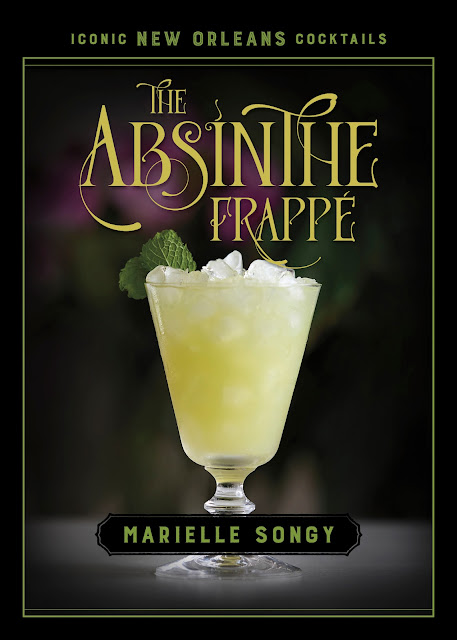

"The Absinthe Frappé" is a deep dive into the history and culture of absinthe in New Orleans. Songy's book explores the origins of absinthe in the city, how it became popular, and its eventual downfall. The book also includes recipes for traditional New Orleans absinthe cocktails, like the Sazerac and the Absinthe Frappé, as well as lesser-known drinks like the Ramos Gin Fizz (Editor note: The Absinthe Frappé book does not contain a Ramos Gin Fizz recipe but the second book here does!). Songy's book is a fascinating read for anyone interested in the history of absinthe in New Orleans. The author's passion for the subject is evident on every page, and the recipes are sure to inspire readers to try making their own absinthe cocktails at home.
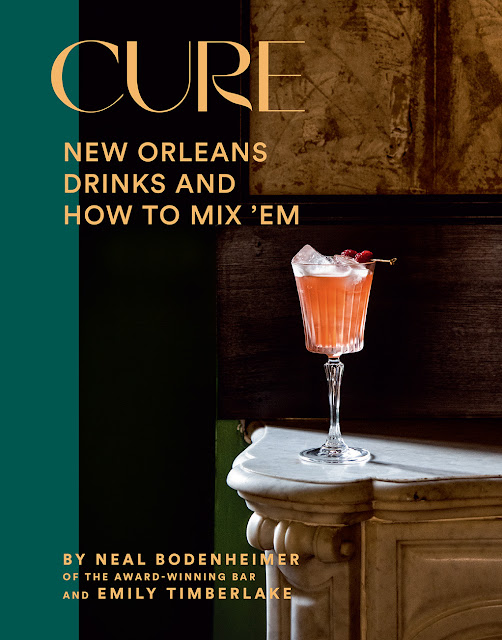


On the other hand, "Cure: New Orleans Drinks and how to mix 'em" by Neal Bodenheimer is a cocktail recipe book that celebrates the unique culture of New Orleans. While the book is not specifically focused on absinthe, it includes several absinthe-based cocktails (actually only one: the Absinthe Suissesse, alongside five with Herbsaint), as well as other classic New Orleans drinks like the Hurricane and the French 75. 

What sets "Cure" apart from other cocktail books is its focus on the history and culture of New Orleans. The book includes essays and stories about the city's bartenders, drinks, and traditions, giving readers a deeper understanding of the unique cocktail culture of the Big Easy. Overall, both "The Absinthe Frappé" and "Cure: New Orleans Drinks and how to mix 'em" are excellent additions to any absinthe lover's book collection. Whether you're interested in the history of absinthe in New Orleans or just looking for some new cocktail recipes to try, these books are sure to satisfy. So, pour yourself a glass of absinthe and settle in for a good read!"

So much for ChatGPT. 

What do I think of these books? 

"The Absinthe Frappé" is a superb addition to the books I have reviewed previously about absinthe and cocktails. It has an excellent history of absinthe, correctly crediting the Henriods with its creation, and then detailing its boom, bust and subsequent re-birth. The book's focus is unashamedly American, mainly on New Orleans as the birthplace of the absinthe frappé. The story of the absinthe frappé is told in great detail and the book concludes with eleven absinthe cocktails and a list of bars in New Orleans where one can enjoy an absinthe frappé. 

Including, of course, The Old Absinthe House.

Followed by a wonderful three page list of sources. Sadly many of these are digital links, which may require a lot of concentration to type in correctly (do not attempt to type in these links after a few absinthe frappés!). Generally typing in the keywords (e.g. a book title) may get you to the link. Google famous new orleans drinks and how to mix 'em to get to a legal digital version of this classic

Don't be deceived by the book's size (4.8 x 0.32 x 6.85 inches). The book is very detailed, with a lot of information not assembled together elsewhere and with absolutely no padding. Its size allowed me to take it and to enjoy it on train journeys and will allow those visiting New Orleans to use it as a great guide book while going on a tour of the best absinthe bars in NOLA. It is not a coffee table book (many of those are books that are bought to be displayed and are never read). This is very definitely a book to be read, to be enjoyed and, hopefully, to inspire its readers to perfect their absinthe frappé making skills!   

"The Absinthe Frappé" was written by Marielle Songy, who was born and raised in New Orleans. We've been Facebook friends for a while and I am grateful to her and her publishers for an advance copy of the book for review. When I got the book, I asked her some questions: these and her answers follow: 

Do you have any plans to write more about absinthe and/or any other absinthe cocktails? 

I don't have any current plans to write about any other absinthe cocktails, but I do want this to be the beginning of adding to the conversation and absinthe education. I hope to do what I can to spread the word about absinthe, dispel the myths, and hopefully make it a bit more popular again (or at least get to the point where at least one absinthe-forward cocktail is offered on fine cocktail menus). 

What was the most surprising thing you discovered about absinthe and/or the Frappé? 

One thing I discovered in my research is just how versatile absinthe is! Before I started the book, I hadn't really tried many absinthe-forward cocktails. The book changed that. Of course there's the Frappe, but all of the cocktails in my cocktail guide are drinks I have tried throughout this process. My favorites are Bitter Party of One and Death in the Afternoon. 

How many absinthe frappés did you have to consume while researching/writing the book? Do you make this great cocktail at home or do you prefer to drink it in the great bars of NOLA? 

I tried many absinthe frappes throughout my research and I was surprised at how different they are, depending on the bar! My favorite is still the classic with the crushed ice and simple syrup, but Mr. B's had an interesting one served in a martini glass with egg white in it. I was also surprised at how many bars serve the frappe "neat" with no ice. I have made the cocktail at home because it's quite easy, but I do prefer to enjoy it at a nice bar. 

Would you be brave enough to specify the best absinthe frappé you had? What was so great about it? And which bar? Or would you prefer not to answer that? For me, it was at Cure and, of course, it contained La Clandestine! 

My favorite is definitely Cure. I just think it's made perfectly with the dome of ice and is a feast for the eyes as well as the taste buds!

.....................

Marielle and I agree on a lot. Notably on the role of the Henriods and on the best place in NOLA to enjoy the absinthe frappé. I hope to get to NOLA again soon to enjoy this superb drink at Cure with Marielle. Santé!

When I told Marielle that her book was going to be reviewed at the same time as "Cure: New Orleans Drinks and how to mix 'em,"  she wrote "I am beyond flattered to be included in the same universe as Neal's wonderful book, of which I also have a copy."  Here is Cure NOLA:


I first made it to Cure and met Neal Bodenheimer on July 15th, 2013, which was also my first day ever in New Orleans. I was staying at The Monteleone for Tales of the Cocktail and was just a few yards from The Old Absinthe House, so Cure was not the first NOLA bar I visited. But it made a big impression on me, so I was thrilled to be given Neal's new book as a present a few months ago.

For those of my readers who want to read about absinthe, you may be a little disappointed to note that there are not many absinthe recipes in this book. There is a recipe for Absinthe Suissesse (which has been one of my favourites recently) and, in the food recipe section, 

you'll find Mussels in Absinthe. Gorgeous!

This being New Orleans, there are, of course, several recipes with Herbsaint and, since absinthe and Herbsaint are more interchangeable here than anywhere else, that's understandable.

Neal's book is, indeed, a gorgeous and highly practical cocktail book with an amazing collection of almost every classic New Orleans cocktail. The Sazerac, 

the French 75, Ramos Gin Fizz. the Hurricane etc. Every New Orleans classic apart from the Absinthe Frappé. It's almost as if Neal knew Marielle's book was on the way!

It's a superb cocktail book, detailing Cure's style, spirits selection criteria, and techniques. As examples of the care and love that goes into making a Cure cocktail, there's almost a whole page about how to express citrus and another on whether or not to chill glassware!

From then on, Cure follows a straight-ish historical line through New Orleans cocktails from the Sazerac (and variations), the Old-Fashioned (and variations) etc.

The cocktails are interspersed with sections on the New Orleans Cocktail Bucket list (the best bars in town), the best music venues, classic dive bars, Black bars, Mardi Gras, and a page on the Green Fairy! This is a book to bring back memories of Tales of the Cocktail and NOLA (yes, it's time I returned post-Covid), with mentions of many people I have met there or elsewhere. This is a book with, it seems, hundreds of short stories (some of these are cocktails, some are Neal's anecdotes about NOLA). It's a book you dip into for inspiration or an idea, and half an hour later you're still reading about a cocktail's variations or the technical issues involved. For example, Cure used to use 21 drops of Peychaud's in a Sazerac but now uses 23 drops!

................................

I love both these books: Marielle's for the deep dive (thank you, ChatGPT) into the history and culture of absinthe in New Orleans, Neal's for the memories it evokes, for reminding me of the places I still have to visit in NOLA and for the amazing cocktail knowledge. This is clearly a must-have cocktail book, even if you're mainly interested in absinthe.

If you're visiting NOLA, you may find The Absinthe Frappé more portable and convenient to carry from bar to bar; alternatively you may want to splurge out on the Ebook version of Cure to take with you. 

I'd recommend both! Santé, Marielle and Neal!

Tuesday, 21 July 2015

Hemingway and Absinthe


Background

Ernest Hemingway is often mentioned as being one of the great absinthe drinkers of the 20th century. Well. not just a great absinthe drinker, but a prodigious drinker generally. Absinthe lovers often refer to this Hemingway quote (from a 1931 letter about an evening in Key West):

Got tight last night on absinthe and did knife tricks. Great success shooting the knife into the piano. The woodworms are so bad and eat hell out of all furniture that you can always claim the woodworms did it.

The similarity between woodworm and wormwood is, of course, intentional.

He is also credited with the creation of the Death in the Afternoon cocktail, of which more later.

With July being both the anniversary of his birth (116 years ago today on July 21, 1899) and his death (July 2, 1961), it seems an appropriate time to dig a little deeper into Hemingway and absinthe. And the best place to start was with Philip Greene, author of the book shown above: the key book for students of Hemingway and cocktails (and one which I warmly recommend).

I was fortunate to be at Philip's seminar at Tales of the Cocktail in 2013, and have corresponded and Skyped with him more recently.

Absinthe in Hemingway's writings

Given that absinthe was illegal in the US when Hemingway would have been of drinking age, and that it was illegal in France once Hemingway moved there, I asked Philip where Hemingway would have been exposed to absinthe.

The first time appears to have been when he was a journalist working for The Toronto Star and wrote about the Great Aperitif Scandal in Paris in an article published on August 12, 1922. The full article is online here.

Hemingway includes reference to absinthe as follows:-


This is historically very interesting since it is one of the few contemporaneous records of moonshine absinthe made, sold and enjoyed in Paris after the 1915 ban.

I then asked about Hemingway's exposure to absinthe as a drinker living in Paris. Some of this is clearly reflected in his first novel.

While in Paris, Hemingway moved in creative circles, including Picasso, James Joyce with whom Hemingway frequently embarked on "alcoholic sprees," and F. Scott Fitzgerald who inspired him to write his first novel. On his birthday in 1925 (90 years ago today), Hemingway started writing The Sun Also Rises, and this includes many references to absinthe and/or Pernod being enjoyed in both Paris and Spain. Of course absinthe was legal in Spain and illegal in France, so the references (which would have been at least partially based on Hemingway's encounters with absinthe) are quite illuminating. Hemingway is claimed to have been to so many bars in Europe that there is even a bar in Madrid called “Hemingway never drank here!” In Paris he drank at Harry's New York Bar, The Ritz, and many other top hotel bars (who may not have served absinthe openly after the ban), but in The Sun Also Rises the most notable encounters with absinthe are at Café Napolitain and Closerie des Lilas where absinthe/Pernod are enjoyed quite openly. Both these bars were real bars that still exist today.

Some observations and questions:-

One wonders whether these bars would have served absinthe to Hemingway and others as openly as they seem to in the book. Philip believes absinthe would have been served more discretely, and I would tend to agree.

Were these bars selling real absinthe circa 1925? Pernod is described in the book as being "greenish imitation absinthe," which might sound like pastis. But pastis was not launched in France until the 1930's. Maybe the Pernod Hemingway writes about was a fake?

And when Hemingway writes "Pernod" in The Sun also Rises, it also seems possible that the word is being used as a generic, rather than the brand (when not at the start of a sentence, Pernod is always written here with a small "p").

As for Hemingway's own experiences of absinthe, maybe they are reflected in his writings?

As the action in The Sun Also Rises moves from Paris to Pamplona, Spain, one evening the main characters drink at least four absinthes each (in the course of one page!). The novelist writes:-

"I was drunker than I had ever been ... the room was unstable unless I looked at some fixed point ... I .. lay on the bed. The bed went sailing off." .... "The world was not wheeling any more. It was just very clear and bright, and inclined to blur at the edges." 

Of course these descriptions may not be much more than average drunkenness but the description "very clear and bright" seems to go beyond that, and may seem familiar for some absinthe drinkers.

Absinthe appears in later Hemingway books, including The Strange Country and The Garden of Eden (both published posthumously). It is especially interesting, in the latter, to read Hemingway's account of why absinthe should be "louched" correctly:-


This section is set in absinthe-legal Spain, but after the characters go back to France, they do not have access to absinthe. The author writes:

"He would wait for her and have a drink out on the terrace after his work. It was impossible to drink pastis after absinthe and he had taken to drinking whiskey and Perrier water."

"Impossible to drink pastis after absinthe?" The context makes it clear that, in Hemingway's opinion, absinthe drinkers would not be satisfied with pastis. A sentiment that must be interesting for those companies that produce both absinthe and pastis!

After living in Paris, Hemingway moved back to the USA (Florida), then to Cuba and finally back to the USA again (Idaho). He is known to have had absinthe while living in Key West and may well have had absinthe in Cuba, although there is no surviving evidence of that.

The Death in the Afternoon

In 1935 (coincidentally the year that La Clandestine was first made illegally), the Death in the Afternoon is born. This was Hemingway's contribution to a book of celebrity cocktails "So Red the Nose, or Breath in the Afternoon." The description of the drink's genesis is shown below:-


Hemingway loved champagne and absinthe, as well as rum, but some doubt whether he would really have liked the idea of mixing champagne and absinthe. Views of the cocktail are sometimes polarised among absinthe lovers, and champagne lovers may be even less positive! Read a little more on the Death in the Afternoon (and my variant) in the second half of this article.

Other Absinthe Cocktails?

In all the rest of Hemingway's writings published to date, there are no ways to drink absinthe other than the classic serve (Hemingway did not use a sugar cube) and the Death in the Afternoon. He created other cocktails (e.g. Death in the Gulf Stream with Genever, lime juice, simple syrup, Angostura bitters and zest of lime), and was known to drink many other cocktails (especially those with rum). He frequented many of the world's top bars (including London's Savoy and The Ritz, and Havana's Bar La Floridita) and would surely have met the inventors of the Corpse Reviver 2, the Monkey Gland, and other famous absinthe cocktails, but seems to have never mentioned these or any other way of enjoying absinthe.

I asked Philip if Hemingway might have enjoyed absinthe any other way, and he confirmed that while he knows of none, Hemingway's letters MAY include others. His letters are released on a "drip-feed" basis every few years in "Selected Letters;" more might therefore appear in the future.

For now, however, Hemingway's absinthe drinking is like many of the drink's biggest fans: the traditional, drip serve only (with the one exception of the Death in the Afternoon). I had wanted to find evidence of Hemingway as an adventurer within absinthe as in his life, but instead I found him to be respectful of absinthe and of its traditions (even if he may have over-indulged a few times). Maybe his respect is partially due to absinthe's legal status in the USA and France at the time. And maybe he really was a purist at heart.

I suspect, however, that Hemingway might have enjoyed The Old Man and the Sea, a new absinthe and champagne cocktail inspired, in part, by The Death in the Afternoon. Developed by our friend, Dave Whitehead, at Melbourne's Polly Cocktail Bar as part of their Hemingway celebrations this week. Cheers, Dave!


And thanks for your help, Philip.You've chosen a fascinating subject to specialise in. Cheers! Salud!

Saturday, 7 December 2013

Seasonal gifts and cocktails for the absinthe lover


Originally published in 2013: some content and links may be out-of-date.

The Christmas and New Year season brings out the best in us .. but also can be a difficult time. In the run-up to Christmas, there's the present-buying frenzy, and then there's all that drinking over the holidays. 
Because absinthe has only become available in the last few years, it is not seen as a natural part of gift-giving or of celebrations (at least not in the same way as a single malt or a glass of champagne). That fact makes absinthe an even more unusual gift or celebration drink for the person "who has everything," so I have scoured the shops to bring you the best gifts, and then I'll consider what to drink.

Those who've read my blog before will know I'm commercially involved in the absinthe sector, and I'll include some products I work on. Since it's the season of goodwill, I'll also include a wider range of products, including several made by my industry colleagues.

Absinthe Gift Guide Part One - Bottles

Lots to choose from but among the most interesting are:-

Butterfly Classic Absinthe, 
numbered and signed by the distiller (US only, limited edition of 1902 bottles available at good stores in California and Massachusetts). Unsigned bottles are available in Europe and Japan.

Ridge Absinthes from Montana,

a rarity since the branding will soon be changed to Vilya.

Marteau Master's Reserve from Seattle, 

which is a relatively new offering, currently in limited distribution in the Pacific North West

Jade's 1901

which is available online in Europe and in Jug Shop in San Francisco; other US stockists coming soon for this.

Locally made craft absinthes can now be found in many other US States as well as in some towns in the UK. I haven't tasted all of these, so you may want to check the reviews before you buy.

Small bottle stocking fillers make great presents; these include La Clandestine and St. George 200 ml bottles in the USA (Total Wine) and from some European stores. A 200 ml mixed set of Artemisia Absinthes 


is available in Europe. Some European stores offer a Dramvent Calendar of 24 x 3 cl absinthe samples!


In case you cannot find what you are looking for in your State or country, remember that you may be able to purchase online for shipping within the USA (Hi-Time seem to offer the widest range of States) while in Europe online stores have big assortments, including accessories, which they can ship to many countries. 

All the online shippers are very busy in the run-up to Christmas, so check their delivery timings.

Absinthe Books and Films

Absinthe lovers will also love the great range of books and films available.


it's definitely one of the top absinthe gifts for this year.


remains the best book about absinthe cocktails, although it seems to be in short supply.

The ultimate absinthe book gift is


Chris Buddy's 

Absinthe: The Movie (reviewed here) is available on DVD, or as a download.


Posters and other memorabilia

Absinthe Posters has an excellent of historic posters and postcards

Steampunk artists have created some interesting works with absinthe, notably


San Diego's Winona Cookie. She has a wide range of absinthe pictures available as prints and cards.

Some of David Nathan-Maister's personal collection is available, including photos from the personal archives of the Pernod family 


and a very rare Swiss clandestine distiller's alembic from the 1930's or 40's


Distillery Visits

Several US distilleries advertise tours (notably St. George and Philadelphia Distilling) but many of those who don't advertise tours will be pleased to help. In Europe, Artemisia offer distillery visits via Smartbox.

..........................

Absinthe Cocktails

So once you've finished buying and wrapping presents, it is time to prepare and enjoy an absinthe cocktail or two.

Many people have their own favourite egg nog recipes, so it may be presumptive to suggest another. At the time of writing Sage at Aria in Las Vegas had an exceptionally good kitchen-made absinthe egg nog.

Of course Christmas is a time for sparkling drinks. Absinthe and champagne make the classic Death in the Afternoon, but, however bad your Christmas lunch was, that doesn't sound like the right drink for the occasion. I prefer the White Christmas (created for me by Adam Schuman of the Fatty Crab, New York in March 2009):

1/2 oz La Clandestine Absinthe
1/4 oz Simple syrup
1 oz Grapefruit juice
3 dashes St. Elizabeth Allspice Dram (The Bitter Truth Aromatic Bitters can be used instead)
Top up with Prosecco

Adam Schuman's brilliance lies in inverting my suggestion of falling snow with the rising bubbles of the Prosecco, but this is more complex and more interesting than the Death in the Afternoon. Great job, Adam!

So with a cocktail book/video/poster/antique in one hand and a White Christmas cocktail in the other, I'd like to wish all my readers Season's Greetings!


Thursday, 14 March 2013

Absinthe Antiques


There is no hidden significance in my use of the above photo in an article called "Absinthe Antiques!" From left to right, it shows me, Kamal Mukherjee of DrinkUp NY, Scott MacDonald (more about him in a second), and Maxwell Britten of Maison Premiere. We're at Maison Premiere here. It's a rare photo showing four absinthe "movers and shakers," none of whom seem to be drinking absinthe. To be fair to us (and our livers), some of us had started drinking absinthe a little earlier (Maison Premiere's Happy Hour offer of $1 oysters is a must) and some of us would be seen drinking absinthe cocktails a few hours later in Battery Park!

This was the first time one of the most important US absinthe retailers (Kamal) had met with one of the most important US absinthe mixologists (Maxwell). It was also the first time I had met with fellow absinthe forum member, Scott, and it is always great to find fellow absinthe lovers several thousand miles from home. Scott makes and designs guitars for a living (what a nice job!) and indulges his love of hand-crafted absinthe and the paraphernalia surrounding absinthe in many of his spare time moments. And now he is becoming well-known in his own right as the author of Absinthe Antiques: A Collection from la Belle Époque.


Scott kindly arranged an advance digital copy of the revised edition of Absinthe Antiques for me a few weeks ago, and I have been enjoying it enormously. If some people can derive a lot pleasure drinking absinthe by feeling that they are enjoying history (and absinthe has more than its fair share of history), then what better way to enjoy that history by drinking absinthe in antique glasses, using antique spoons, antique pourers etc? Sadly, however, while most of my readers can access good absinthe at a variety of prices, it is not possible for all of us to enjoy drinking them using antiques. Which is where Scott's book comes in. In sumptuous details, he shares with us an "orgy" of antiques, from fountains


through spoons


 and glasses,


and many, many other types of advertising ephemera that you need to read about and to see to understand.

All with just the right amount of accompanied text to get the reader involved in the subject!

Eagle-eyed readers will have noticed that this is the revised edition. However, it's much more than just "the Director's Cut." At 221 pages with more than 300 photographs, it is more than twice as long as the first edition. This also has new chapters on postcards, art, antique bottles, the Pontarlier Museum's absinthe exhibit and the absinthe antiques market at the Absinthiades (sorry to say, Scott, that with the new Absinthe Museum opening in the Val-de-Travers in 2013, you may need to add a section on that too!).

I asked Scott what was his vision of the book, and his reply was illuminating. "What seems to happen for many reading it is this: they come away with a deeper understanding of what absinthe is and was, despite it being a book about the pieces used in its service. It's almost as if it is a round-about way of seeing absinthe through the eyes of its history. The spirit of the Belle Époque is clear in these antiques, as is the romantic way I feel about them."

And, to me, it's clear that Scott's vision has been achieved here.

To describe Absinthe Antiques as a coffee table book might be accurate, but it doesn't do the book justice. Yes, it's a great book to have at home to dip into from time to time. But it's also one of those rare books in which the passion of the author for his subject is clear on every page. You can see Scott's love for his antiques in the way he has organised his compositions ... the backgrounds, the lighting, the shots themselves and the whole layout of the book.

And at a time when many things are becoming smaller (iPad minis etc), it's nice to find it's a big book too, as this photo makes clear (11" x 8.5," so 17" wide when opened).


Two final comments.

Since it's a book about antiques, it might have been interesting to have told the reader how much the items shown actually cost (or maybe a range of costs). That would have made it an even more useful reference work, although I know it is not always easy to put an accurate value on antiques. And maybe the prices would have scared people! I put this point to Scott, and his eloquent response was that he did not want to talk about something that has nothing to do with the spirit and original purpose of the antiques. He prefers to celebrate the antiques, rather than to demean them with a monetary value. In any case, "For the price of a couple of bottles of absinthe, one can easily find a full service for two of very nice spoons, saucers and glasses!"

A nice detail for the French (and those in the French-speaking part of Switzerland): the book includes a complete French translation (by Marc Thuillier) via an appendix.

And here's my favourite photo, which serves so well to illustrate the care Scott has taken with details: an Everett upright grand piano, born between 1900 and 1905 in Boston, birthplace of the vintage American absinthe Butterfly of the same era (that's NOT a pre-ban Butterfly here!).


Finally, reader, beware. Some of the more unscrupulous online absinthe "dealers" exaggerate the completely irrelevant "drug" side of absinthe. Absinthe Antiques, however, could well prove addictive, and you may find yourself scouring the markets for antiques every weekend ...

Availability details for the book are here.

Santé, Scott, for an excellent, enjoyable (but maybe addictive!) book.

Friday, 8 March 2013

Back to the future


I am delighted to confirm that I will be co-presenting a seminar largely about absinthe at this year's Tales of the Cocktail: the theme will be "The Savoy's Green Fairy Secrets Revealed." I will be talking about Harry Craddock's Savoy Cocktail Book of 1930 which contains no less than 105 cocktails made with absinthe, and I will be joined by two very well-known bartenders. More on this at a later date.

As part of my preparation for this seminar, I recently purchased


The Deans of Drink, a brand new book by well-known cocktail historians, Jared Brown and Anistatia Miller. It is a fascinating book with an amazing amount of information about the Savoy's Harry Craddock (now known to have been born in England) and about Harry Johnson, whose "New and Improved Bartenders' Manual" of 1882 is a classic. Mixologists and bartenders with any sense of history will already know Harry Johnson's book and many will have a re-print. For me, it gives a very interesting perspective on how absinthe was perceived in the USA towards the end of the 19th century, and, in particular, how it was served. Following a long list of the different liquors that are required in a Bar Room (primarily whisk(e)y, brandy, rum and gin), the book lists the principal cordials used for mixing drinks. This list starts as follows:-

Absinthe (green and white)

and this is one of the few times that a classic cocktail book distinguishes between the two. Even today, that doesn't always happen.

While Harry Johnson's book doesn't contain as many absinthe cocktails as The Savoy, it contains two (and a bit) intriguing pages about how to mix absinthe.


Without a time machine, it can be difficult to know how drinks were perceived and served over 130 years ago, but these pages (and the rest of the book) come close to providing that insight on absinthe in the USA at that time. Absinthe was clearly seen as a "normal" drink, with no hint of green fairies! The so-called old French style does not include sugar, while the other styles have several different ways of sweetening the absinthe. "American or frozen absinthe" resembles today's Absinthe Frappé as drunk in the USA, (although it is different from Craddock's Absinthe Frappé). And, surprise, surprise (!), there is no mention of fire.

So why is this post entitled Back to the Future? Because in providing an insight into the past, Harry Johnson and other famous cocktail practitioners and writers of the past are inspiring what happens in some of the top bars today. And I see this as a trend that will continue to grow.

Here are two very recent instances of their influence:

Last week, March 1st was the 8th anniversary of the Swiss re-legalisation of absinthe. And March 5th was the 6th anniversary of Lucid's label approval, an event now marked by some as USA's National Absinthe Day. One excellent bar in Canada (Clive's Classic in Victoria, BC) marked both events with a special absinthe menu, stating on Facebook:

"This begins tonight! We are doing 5 days to celebrate National/International Absinthe Day/s. March 1st is for Europe and March 5th for the US, so we decided to bridge it."


Fascinating to see the French, American and Italian styles itemised here, with details very similar to Harry Johnson's. And across on the other side of the continent, this is the absinthe menu, officially launched in February, at New York's Dead Rabbit Bar:


Great to see Harry Johnson and other famous bartenders/writers (Jerry Thomas, William T. Boothby, O.H. Byron, George Winter, and C.F. Lawlor) credited here.

And fascinating to see that in both Clive's Classic and the Dead Rabbit, these are essentially variations on the absinthe sweetened with sugar and with iced water theme, almost identical to Harry Johnson's drinks.

I am often asked "how else can we serve absinthe?" "How else," apart from the classic absinthe drip (with fountain, balancier or carafe)? "How else," apart from Craddock's 105 cocktails with absinthe? "How else," apart from the hundreds of absinthe cocktails created daily, it seems, by the world's bartenders? For me, going back to the past provides great inspiration for the future, and I would recommend following the examples - and drink suggestions - of Harry Johnson, Jerry Thomas, Harry Craddock, etc.

"How else?" To quote Harry Craddock: "Here's How!"

Monday, 15 November 2010

Absinthe Cocktails: one more for the road!*


2010 may well be seen as the year that absinthe moved from niche towards (and maybe into) the mainstream. In the USA, competition has stepped up with more companies and brands seeming to get serious about the category, while outside the US more high quality brands have been moving into some new markets.

The growing popularity of good absinthes has been mirrored in the publication of three new absinthe books in the USA. I reviewed The Little Green Book of Absinthe (and the Swiss publication, the Absinthe Cocktail Guide) in March. Then I reviewed A Taste for Absinthe in September. And now, Absinthe Cocktails from Imbibe USA's Kate Simon has been published, this time in both the USA and in the UK.

There are strong similarities between this latest book and Guthrie's A Taste for Absinthe. Both books combine classic cocktails with modern creations. Both books feature cocktails made by many well-known mixologists: Simon includes several cocktails made by some of Europe's mixologists too. As an example, Ales Olasz (who I met last year at London's Montgomery Place) makes a great Reverse Sazerac Sour:

Both books are beautifully photographed: I love this photo from Simon's book showing the Attention as made by Seattle's Jamie Boudreau:

Both books contain an Absinthe Buyers' Guide (as did the Little Green Book of Absinthe). It is very interesting to note that just four absinthes are recommended in all three US guides: La Clandestine and Kübler from Switzerland, Lucid from France, and Obsello (hitherto produced in Spain). Even more interesting to note that Simon's book completely leaves out of her recommendations some of the "absinthes" that were heavily featured in Nathan's Little Green Book. It seeems that the quality message is getting through! And Kate Simon also includes a useful guide to "How to go green without going broke," noting that you could make all 50 cocktails in her book with just one bottle of absinthe.

Absinthe Cocktails and A Taste for Absinthe are clearly the best absinthe cocktail books on the market. I can see A Taste for Absinthe as being a great coffee table book, but it's almost too nice to put too close to the worktop when you're preparing a cocktail. Absinthe Cocktails is more compact and you could take it out with you when bar-hopping. I can imagine going into a bar, pointing at a photo, and saying, "I'll have one of these, please!"

Absinthe Cocktails: 50 ways to mix with the Green Fairy by Kate Simon, is published in the UK by Chronicle at £12.99. All the books mentioned (except for the Swiss book) are available from the major online sellers in both USA and UK. A Taste for Absinthe tends to be more expensive in line with its coffee table appearance; The Litte Green Book is now much cheaper than the others and is also available for the Kindle. Absinthe Cocktails is keenly priced between these two and represents very good value for money, whether you are a long-term absinthe drinker or an absinthe virgin.

It's coming to the end of the working day as I write this ... what better way to mark that than with this from Simon's book: the My Oh My Ty from Brian Miller at Death and Company in New York:

Nice book, Kate! Santé to you and to all those who contributed to it!

* The Real Absinthe Blog wants you to savour your absinthe(s) and to drink responsibly at all times. Good absinthe is made to be savoured and enjoyed ... just like these books!